Thanks to her oral and written communication skills on her ongoing PhD and how its diffusion impacted social media made get the 1st position.
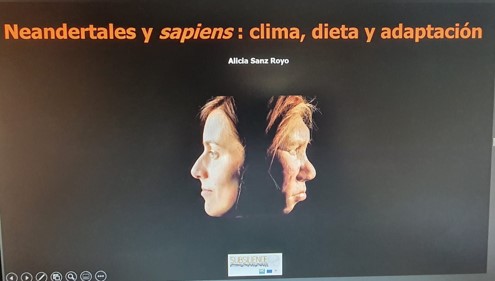
Thanks to her oral and written communication skills on her ongoing PhD and how its diffusion impacted social media made get the 1st position.
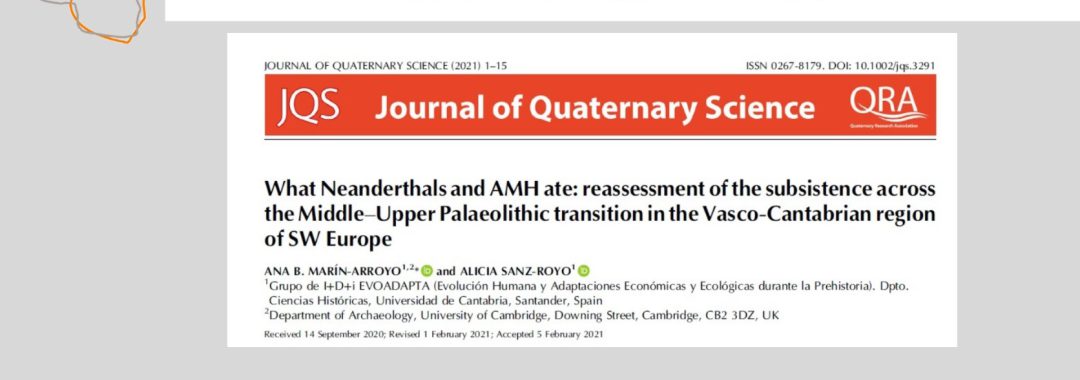
What Neanderthals and AMH ate: reassessment of the subsistence across the Middle–Upper Palaeolithic transition in the Vasco-Cantabrian region of SW Europe. Ana B. MarÍn-Arroyo, Alicia Sanz-Royo
http://doi.org/10.1002/jqs.3291
6 reasons not to miss this work!. See the following video
Funded by the EU, this COSTprogramme aims to create a Europe-wide scientific network and a dialogue about the #Neandertal legacy, among scientists from different countries.
Our IP, Ana B. Marín Arroyo is one of the members of the Management Committee
About iNEAL: http://inealcost.inantro.hr
La fortaleza de los neandertales y sus 250.000 años de existencia chocan con la rapidez de su extinción, misterio que intenta resolver la investigación de EvoAdapta en la que trabaja Ana B.Marín, investigadora en Prehistoria de la Universidad de Cantabria
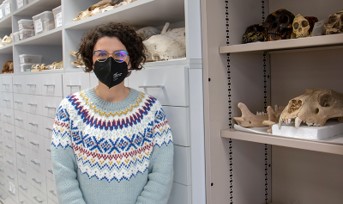
INVESTIGACIÓN | ¿Conoces qué hace el Grupo EvoAdapta de la UC? La investigadora Ana B. Marín-Arroyo nos cuenta cómo nació y la importancia de su trabajo científico, en el marco de la ayuda ERC
La investigadora Ana B. Marín-Arroyo hace balance de los hitos conseguidos en el marco de la ayuda ERC, con la que ha consolidado un equipo y generado una importante producción científica
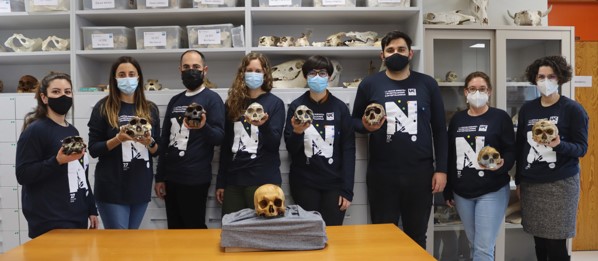
Workshop: Who is who in human evolution
Direct science: chat with our colleague Almudena Estalrrich via the following Telegram link https://n9.cl/tyl5k
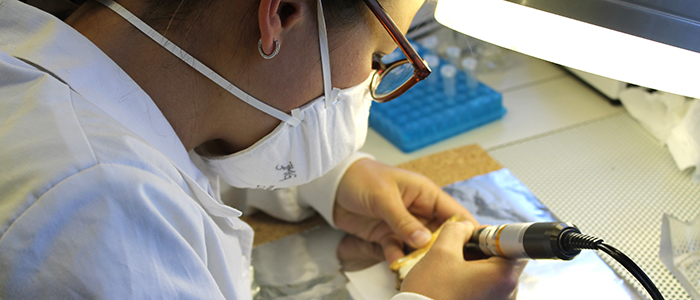
Research Associate in Palaeoclimatic, Palaeoenvironmental and paleoseasonality reconstructions during MIS3 in Europe using stable isotope analysis on animal fossils at the University of Cantabria, Spain Fellow at SUBSILIENCE.
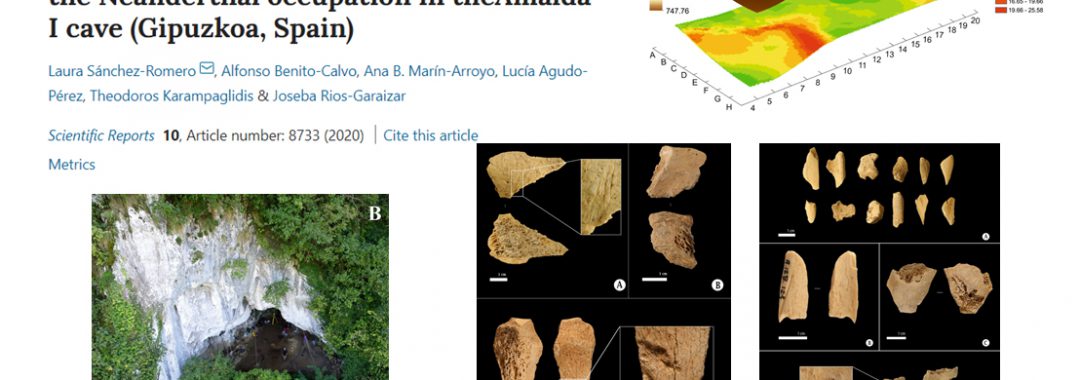
A multidisciplinary research achieved by Spanish members of the University of Cantabria-IIIPC, the CENIEH and the University of California allows disentangling the occupation patterns between the late Neanderthal groups of Northern Iberia and carnivores in Amalda I Cave (Basque Country, Northern Iberia.
Just published in Scientific Reports, the spatial distribution of the lithic tools and animal remains, the taphonomy on the non-identifiable macromammal fragments and new chronological data had provided new insights about the formation of Level VII at Amalda I and the alternation on the use of the cave by humans and carnivores.
Among other funded bodies, this research was carried out within the ABRUPT project (HAR2017-84997-P) funded by the Ministry of Science, Innovation and Universities and SUBSILIENCE ERC-CoG project (818299) by ERCEA, both led by Ana B. Marín-Arroyo
Publication:
2020 Sánchez-Romero, L.; Benito-Calvo, A.; Marín-Arroyo, A.B.; Agudo-Pérez, L.; Karampaglidis, T.; Rios-Garaizar, J. New insights for understanding spatial patterning and formation processes of the Neanderthal occupation in the Amalda I cave (Gipuzkoa, Spain). Scientific Reports 10, 8733