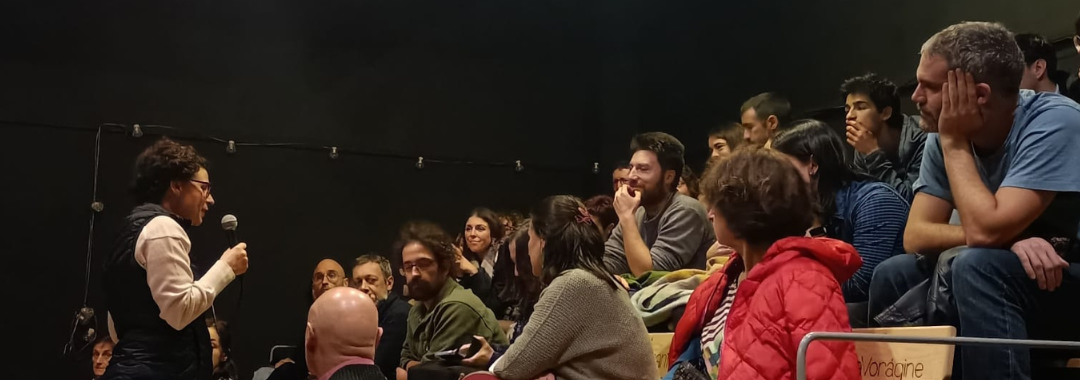
For more than 12 years, the Institute of Physics of Cantabria (IFCA) has brought science closer to the public in a friendly, accessible, and often thought-provoking manner, with the aim of answering questions, creating conversations in places outside scientific laboratories, and stimulating minds. This is the Scientific Café, a series of scientific discussions open to the public, covering various areas of study conducted by renowned researchers. The topics cover everything that advances our knowledge and invites us to learn more about the world around us: science, technology, mathematics, engineering, economics, law, humanities, etc.
Category Archives: News
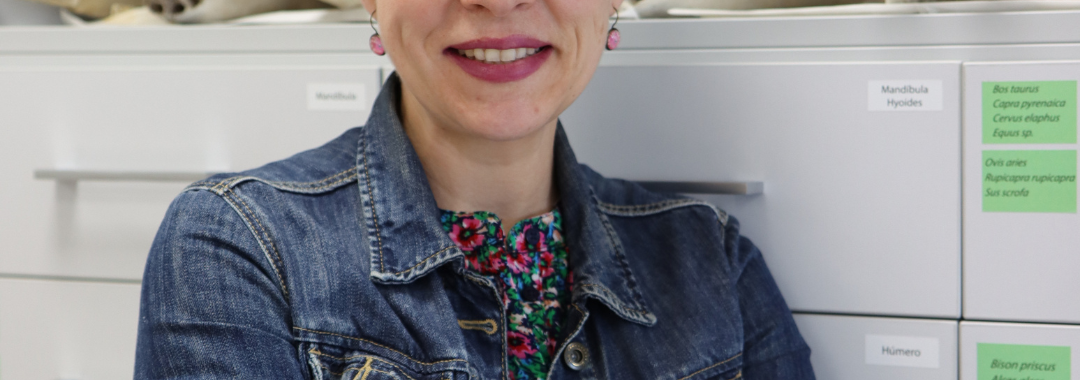
Ana B. Marín-Arroyo, new Associate Editor of the journal Quaternary Science Advances
Ana B. Marín Arroyo has joined the editorial board of the scientific journal Quaternary Science Advances as an associate editor. Quaternary Science Advances (QSA) is an international and fully Open-access journal that supports the rapid publication of peer-reviewed original research articles, short communications, and review papers dealing with all aspects of quaternary Science (archaeology, climate change, palaeontology, paleoecology, etc.).
The Impact Factor is 4.5 included in 2022 Journal Citation Reports (Clarivate Analytics, 2023)
For more information, visit the website: https://www.sciencedirect.com/journal/quaternary-science-advances/about/aims-and-scope
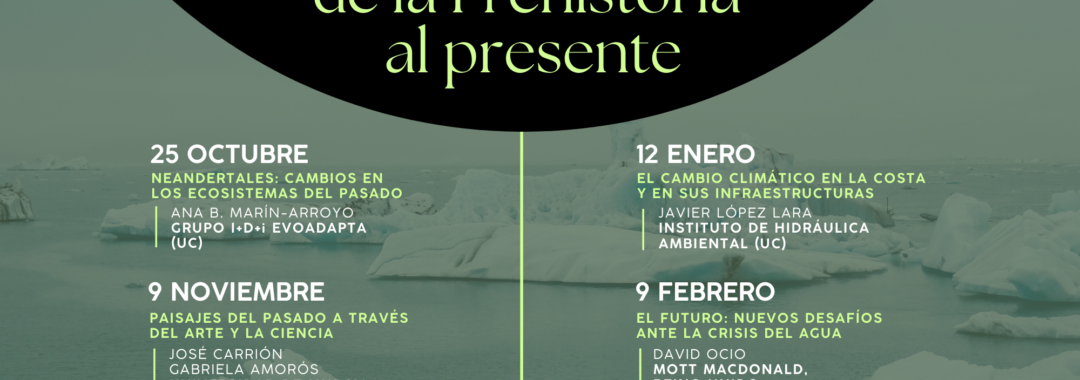
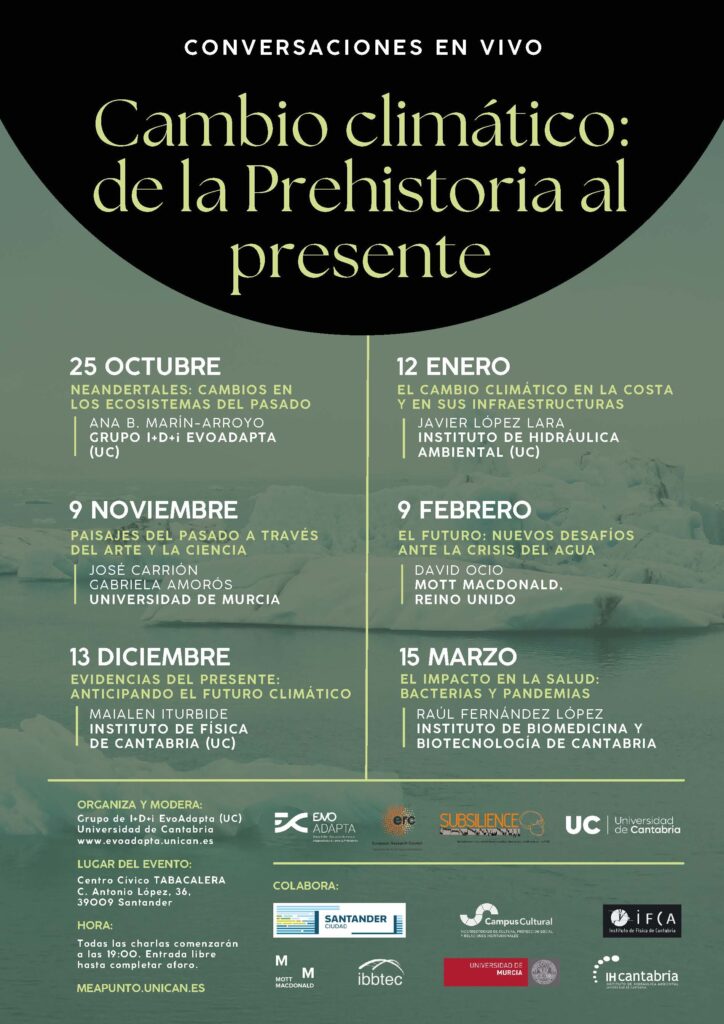
Six ‘live conversations’ to explain climate change from Prehistory to the present day
The research group of the University of Cantabria, EvoAdapta, organizes and moderates these sessions at the Tabacalera Civic Center in Santander.
Global warming is one of the most important challenges facing humanity and the scientific community today. The increase in Earth’s temperature represents a threat to the environment, biodiversity and the stability of ecosystems. To find out if there were changes in the ecosystems of the past and what future challenges the next generations face, the group of the University of Cantabria (UC), EvoAdapta, organizes a cycle of live conversations that addresses the ‘Climate change: from prehistory to the present’.
In an informative interview format, different scientists will respond to relevant questions about global warming. Through six conversations, structured in blocks, from the past to the present, the causes, consequences and possible solutions to climate change will be explored with the aim of bringing the actions and science of this phenomenon closer to society.
The event will feature researchers from the University of Murcia, the Institute of Physics of Cantabria (IFCA), the Institute of Environmental Hydraulics of the UC (IH), the British multinational engineering company associated with the University of Cambridge, Mott MacDonald, and the Institute of Biomedicine and Biotechnology of Cantabria (IBBTEC). The Santander Tobacco Civic Center and the Santander City Council will host these sessions, which will be held at 7:00 p.m. with free entry until capacity is reached.
FIRST LIVE CONVERSATION
The first session will take place on October 25, led by the Full Professor in Prehistory (UC) and Head of the EvoAdapta R&D Group, Ana B. Marín-Arroyo. Inaugurating the past block, the researcher will focus on addressing the climate changes that occurred in the ecosystems of the species that preceded Homo sapiens: the Neanderthals. Were they able to adapt to climate variability? What were your survival strategies in the face of these fluctuations? Marín-Arroyo will reveal some of the causes that motivated their decline, as well as she will make an x-ray of which animal species coexisted with the Neanderthals, depending on the climatic period in which they were found.
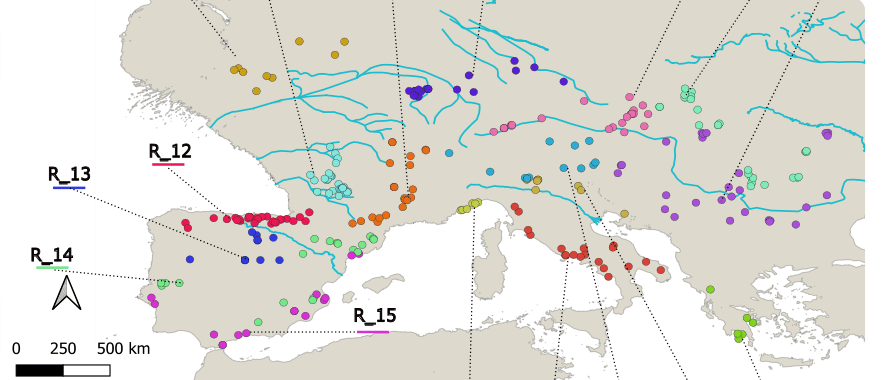
Regarding this species, there are hypotheses and theories that arouse interest within the scientific community and, thanks to her SUBSILIENCE project, funded by the European Research Council (ERC), Ana B. Marín-Arroyo investigates the different ecological environments exploited by Neanderthals in the southern European peninsulas together with a team of international researchers.
FUTURE SESSIONS
Continuing with the past, on November 9, it will be the turn of the scientific paleoillustrator and Doctor in History, Geography and History of Art from the University of Murcia and, member of the ECCE HOMO research group, Gabriela Amorós, together with the paleobotanist and Professor of Evolutionary Botany at the same university, José Carrión. Both will explore the synergies that arise when reconstructing the landscapes of the past through science and art.
Starting the present block, on December 13, the researcher from the Institute of Physics of Cantabria (IFCA), Maialen Iturrioz, will focus on the evaluation of knowledge and the different lines of evidence available in the present to foresee possible scenarios of change climate in the future.
On January 12, climate changes on the coast and its infrastructure will be explored with UC Professor and head of the Climate Risks, Adaptation and Resilience Group of the Institute of Environmental Hydraulics (IHCantabria), Javier López Lara.
Future challenges that revolve around the effects of global warming on water resources and flooding will be presented on February 9 by Civil Engineer and Master in Hydrology, David Ocio. The Engineer currently leads the climate resilience area for the United Kingdom and Europe at the British multinational Mott MacDonald. And, to close the cycle of conversations, on March 15, we will focus on one of the crises of which we have already observed some of its effects. The Doctor in Molecular Biology and researcher of the Intergenomics R&D group of the Institute of Biomedicine and Biotechnology of Cantabria, Raúl Fernández López, will focus his session on the impact of climate change on people’s health and the appearance of bacteria and pandemics.
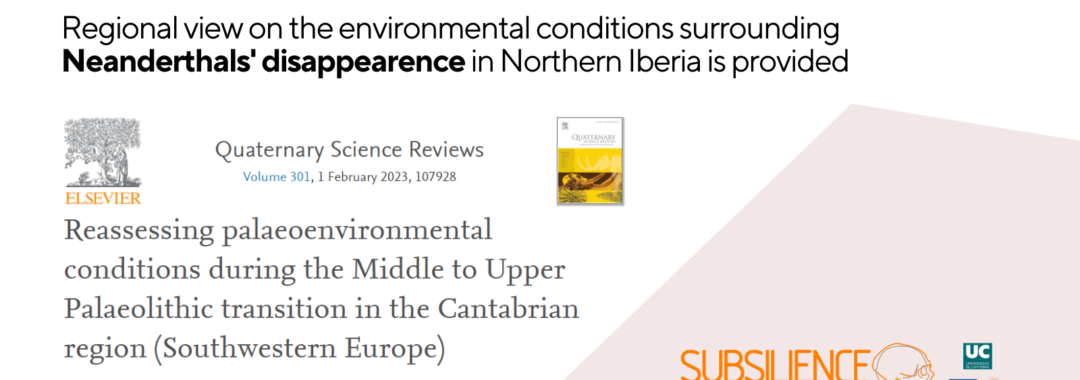
The assessment of environmental conditions shows new insights about Neanderthals’ disappearance in Northern Iberia
The assessment of environmental conditions shows new insights about Neanderthals’ disappearance in Northern Iberia
Researchers from the University of Cantabria published in the scientific journal Quaternary Science Reviews a detailed analysis of the environmental records including microfauna, pollen, charcoals and isotopes in herbivore remains, found in archaeological sites
The study of past climatic and environmental changes is essential to understand human behaviour during Prehistory. The Cantabrian Region, in Northern Iberia, is a key region to unravel the Neanderthals replacement by our species (Homo sapiens). The research “Reassessing paleoenvironmental conditions during the Middle to Upper Palaeolithic transition in the Cantabrian region” published in the scientific journal of Quaternary Science Reviews, offers a regional view of the environmental conditions experienced from 55,000 to 25,000 years: a decisive period when those species inhabited.
The publication is leaded by researchers from University of Cantabria, Mónica Fernández-García, Ana B. Marín-Arroyo and Marco Vidal-Cordasco, and from the University of Lancashire in the United Kingdom, Jennifer Jones. The study answers one of the main objectives of the Subsilience ERC Project: to identify the causes of the Neanderthals decline in the southern European peninsulas by assessing the role that climate might had in human subsistence during MIS3. To do so, an in-depth analysis of the available environmental records recovered from archaeological and palaeontological sites has been carried out. Information about small-mammals, pollen, charcoals, and stable isotopes in herbivores is included.
Research outputs
The results of the study show highly variable environmental changes throughout the archaeological levels, in line with the climatic fluctuations observed in the marine and ice core records. Therefore, this research has not only homogenised the existing data (making them available and open to the scientific community), but also has modelled these data to obtain temperature and precipitation estimations, associated with concise radiocarbon chronologies.
The findings reveal a significant climatic shift that may have affected both human populations in the north of the Iberian Peninsula. Specifically, there is a progressive trend from the Mousterian to the Aurignacian towards colder temperatures, increasing aridity and landscapes opening, especially from 48,000 to 44,000 years, matching the late Neanderthal occupations, followed by a population hiatus, prior to the arrival of Homo sapiens.
The value of the study
Despite the multiple environmental indicators available, the research highlights the fragmentary nature of the regional record during this key period for human evolution and highlights the necessity of further research to obtain a high-resolution regional environmental record, which will allow us to continue to understand the causes behind this human extinction.
ERC Subsilience project
The SUBSILIENCE project, which promotes this work developed in the University of Cantabria, is funded by the ERC – European Research Council, the main European funding organization for research at the forefront of excellence, created by the European Union in 2007. SUBSILIENCE focuses on the subsistence strategies adopted by Neanderthals and early Homo sapiens in the peninsulas of southern Europe and evaluate the role that MIS3 climatic changes might had in their resilience as a species.
Link to the article: https://www.sciencedirect.com/science/article/pii/S0277379122005595
Audiovisual content: https://www.youtube.com/watch?v=GqimxSeiewo
Differences in herbivore abundances motivated the spatiotemporal disappearance of Neanderthals in Iberia
Ecosystem productivity affected the spatiotemporal disappearance of Neanderthals in Iberia is the new paper from the ERC-Subsilience Project (ERCEA-818299), just published in Nature Ecology and Evolution and led by Ana B-Marín-Arroyo and Marco Vidal Cordasco, from the University of Cantabria (Spain).
The research has been published in the scientific journal on ecology and evolutionary biology, Nature Ecology and Evolution, and has been undertaken by the researchers from the University of Cantabria, Ana B. Marín-Arroyo and Marco Vidal Cordasco. The paper assesses the associations between ecosystem productivity fluctuations, the timing of Neanderthals’ demise, and the arrival of the first Homo sapiens populations to the Iberian Peninsula. Within the framework of the ERC SUBSILIENCE project (ERCEA-818299), the study was carried out with the researchers from the Mott MacDonald Cambridge, David Ocio, and the Senckenberg Biodiversity and Climate Research Center of Frankfurt/Main, Thomas Hickler.
Multiple hypotheses have been proposed to explain the extinction of Neanderthals so far. One of the most common ones is related to the climatic change during the Marine Isotope Stadial 3 (60-27 ka yr BP). The main aim of this research was to quantify the effect of the rapid and abrupt climatic oscillations on the plant and herbivore biomass during the replacement of late Neanderthals by early modern humans. Thus, it was tested whether fluctuations of edible resources triggered the spatiotemporal replacement patterns of Neanderthal by modern humans in Iberia.
Results of the research
Researchers found out that the extinction of Neanderthals in northern Iberia coincided with a significant drop in the herbivore and plant biomass. Sometime afterwards, the arrival of modern human groups was coeval with rapid recovery in the ecosystem productivity. Conversely, the disappearance of Neanderthals in the Mediterranean regions was not associated with significant fluctuations in the availability of trophic resources. Therefore, results obtained suggest that the causes of the Neanderthals’ disappearance could have differed between regions of Iberia. Moreover, the Mediterranean regions were more stable during the cold periods and hold higher biomass of medium-large herbivores.
These results shed light on long-running debates. For one, it suggests that an ecological factor could have motivated the early disappearance of Neanderthals in the northern part of the Iberian Peninsula. Furthermore, the results suggest that the last Neanderthal groups were not in impoverished areas; on the contrary, the persistence of the last Neanderthal populations in southern latitudes may have been motivated by the abundance of herbivores that were an important part of their diet.
European Research Council (ERC)
The ERC, set up by the European Union in 2007, is the premier European funding organisation for excellent frontier research. It funds creative researchers of any nationality and age, to run projects based across Europe. The ERC offers four core grant schemes: Starting Grants, Consolidator Grants, Advanced Grants and Synergy Grants. With its additional Proof of Concept Grant scheme, the ERC helps grantees to bridge the gap between their pioneering research and early phases of its commercialisation.
The ERC is led by an independent governing body, the Scientific Council. Since 1 November 2021, Maria Leptin is the new President of the ERC. The overall ERC budget from 2021 to 2027 is more than €16 billion, as part of the Horizon Europe programme, under the responsibility of the European Commissioner for Innovation, Research, Culture, Education and Youth, Mariya Gabriel.
Doi: https://www.nature.com/articles/s41559-022-01861-5
Audiovisual content: https://www.youtube.com/watch?v=1GRmAiXs-L4
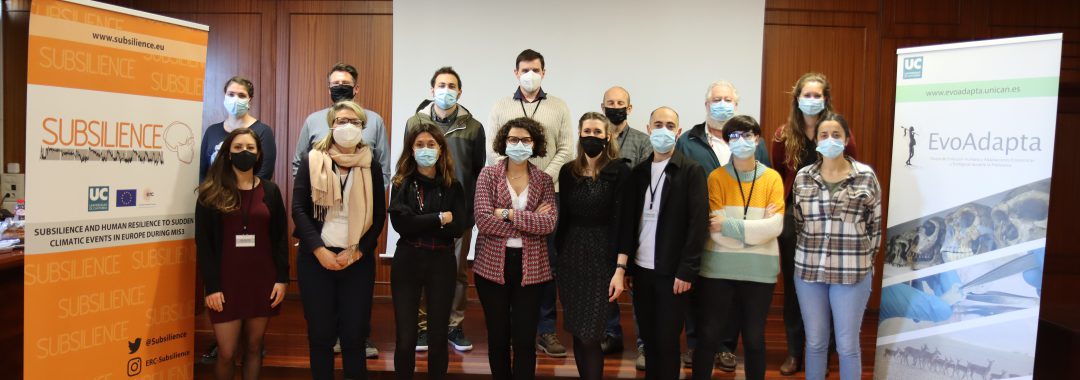
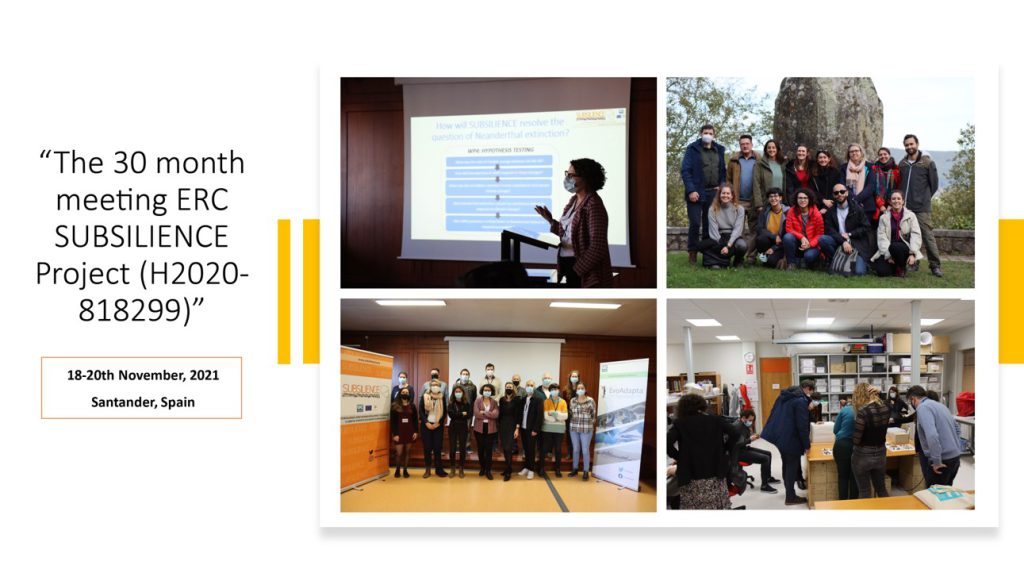
30 month meeting of the ERC Subsilience Project
During 3 days, all the team members and collaborators of the SUBSILIENCE ERC Project were discussing the project results and advances, as well as the future research.
On Thursday 18thwe present all the preliminary data and result of the work package 1, with all the Iberian, Croatian, Italian and Serbian sites; as well as the publications, meeting and outreach activities.
On Friday we were focused on some of the work package 2 results, related with paleoenvironment and paleoclimate, as well and work package 3 results with some of the paleoecology general objectives.
Finally on Saturday we were visiting El Castillo and Las Monedas caves, some of the most important Palaeolithic caves of the region!
https://web.unican.es/noticias/Paginas/2021/noviembre_2021/reunion-SUBSILIENCE.aspx

MIS3 PaleoDiet
“MIS3 PaleoDiet” is the master dissertation of Andrea Pérez (student in Prehistory and Archaeology master 2020/2021) es
She created a catalog with different criteria of easy and quick search in more that 150 articles and books.
Those information is a compilation of the last 100 years research about hominid diet during MIS3 (57-27k cal BP)
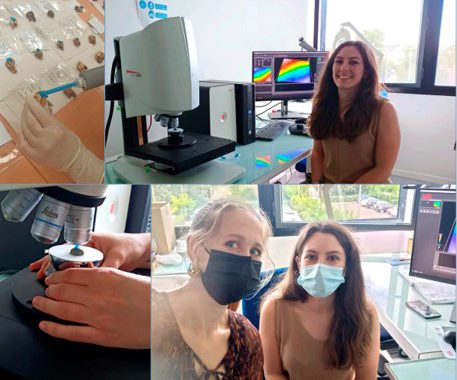
Alicia Sanz-Royo stay at Traces laboratory
Alicia Sanz-Royo is doing a 3-months stay at Traces laboratory- University of Toulouse, being trained by Emilie Berlioz on Dental Microwear Texture Analysis. Aim: on ungulates consumed by humans, unravelling animals diet days before death to infer how the environment was when Neanderthals and anatomically modern humans lived in North Iberia
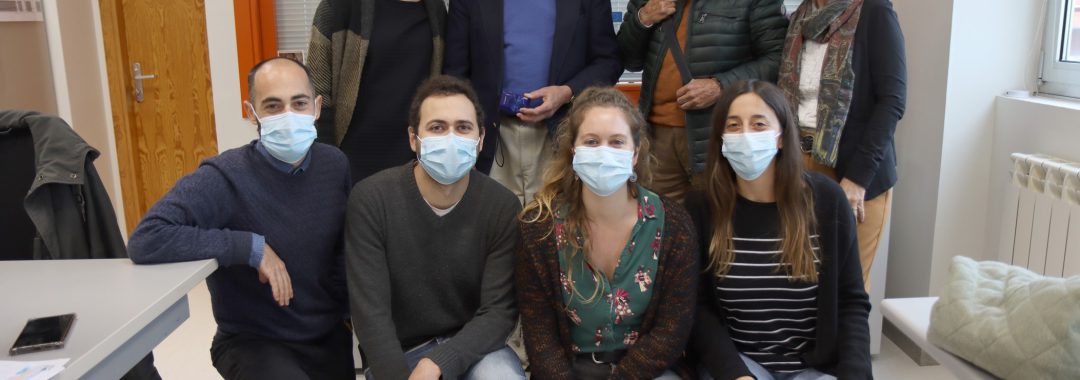
Jesús Altuna and Koro Mariezkurrena visit our lab
Jesús Altuna and Koro Mariezkurrena, archaeozoology pioneers in the Cantabrian Region, visited us with Prof. Lawrence Straus, who is based in Universirty of Cantabria n this month.
It was an honour to discuss about the ongoing subsistence studies in EvoAdapta group and Subsilience ERC Project.